
Trading means buying and selling shares with a plan for how you will enter, manage risk and eventually exit the position. The mechanics are simple, but good trading requires more than pressing Buy or Sell.
Before thinking about strategies, learn how orders work, what bid and ask prices mean, why liquidity matters, and how to define your risk before entering a position.
See the core trading mechanics visually
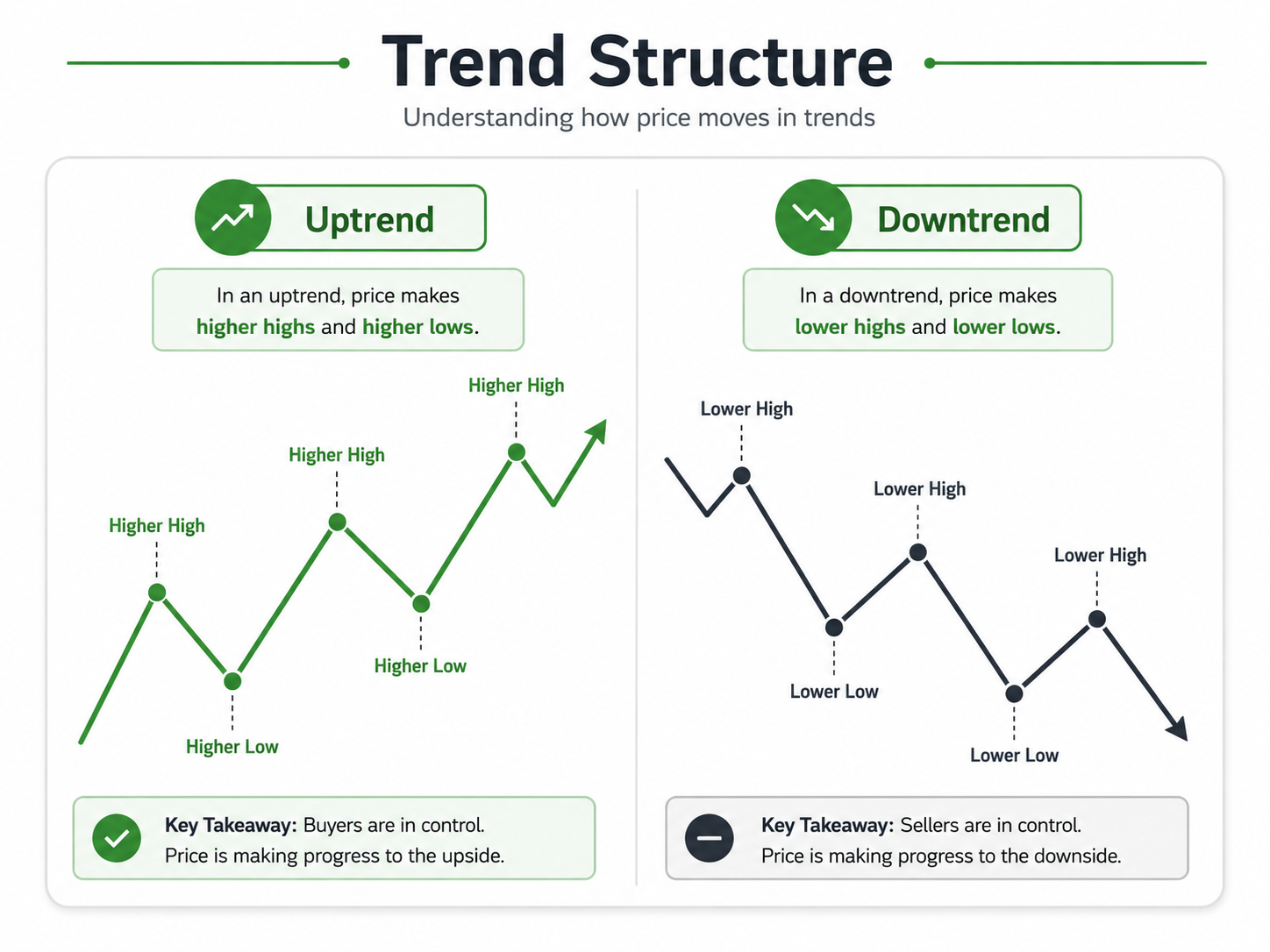
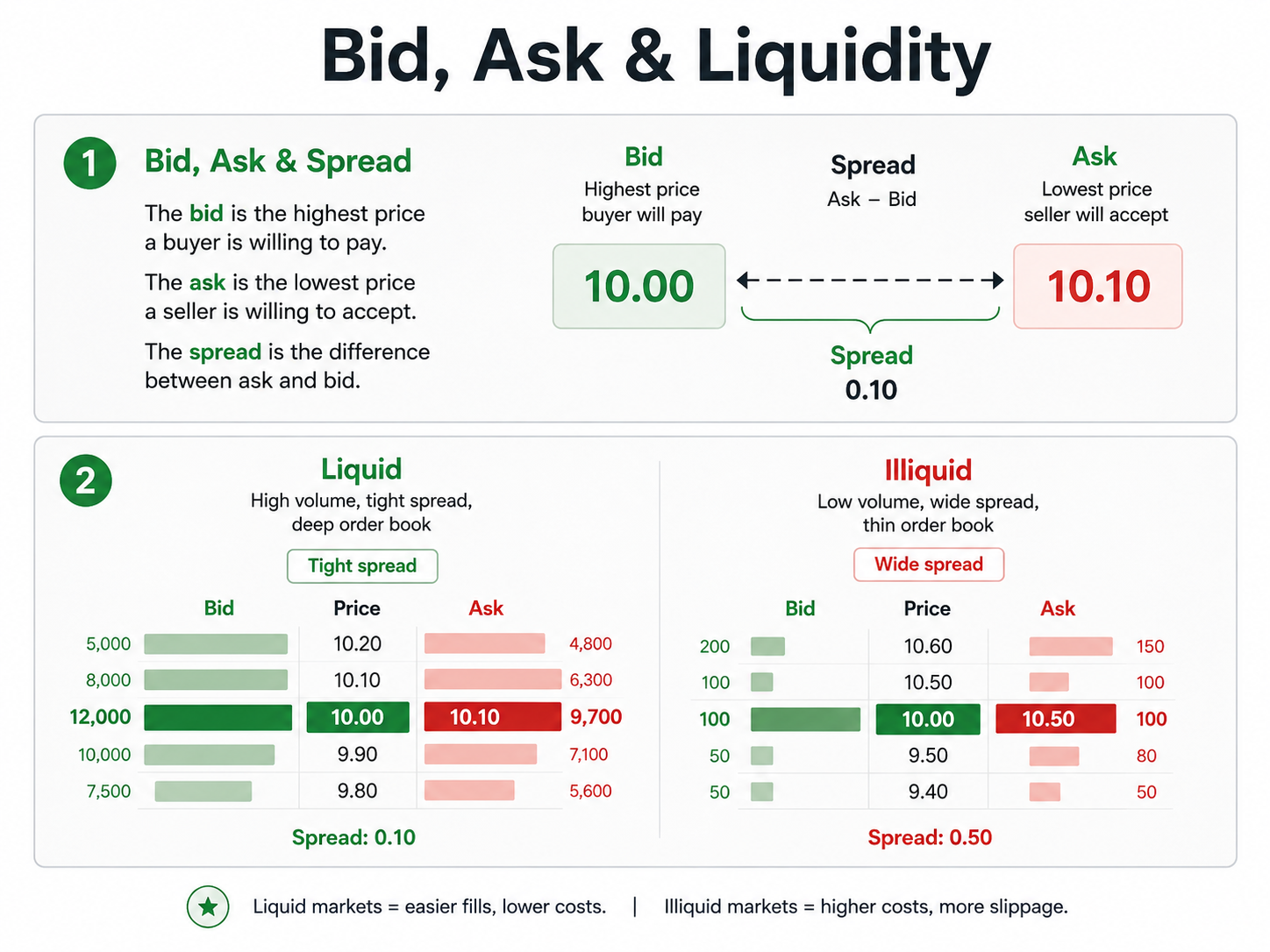
These two diagrams show how an order moves through the market and why bid, ask and liquidity matter before you trade.
Trading and investing are not exactly the same
Both traders and investors buy shares, but the way they make decisions can be different.
A person can be both. You might invest in one company for years while trading another stock for a shorter move.
What happens when you place a trade
When you place an order through your broker, you are asking the market to buy or sell shares under the conditions you specify.
A submitted order is not automatically a completed trade. Price, available shares and liquidity determine whether and how quickly it can be filled.
Understand the bid and ask
At any moment, buyers and sellers may be offering different prices.
If the best bid is ₱10.00 and the best ask is ₱10.10, the spread is ₱0.10.
A narrow spread usually makes it easier to enter and exit near the displayed market price. A wide spread can make trading more expensive and less predictable.
Market orders and limit orders
Limit orders give you more control over price, but they may not execute. Market orders prioritize execution, but price can move while the order is being filled.
Check liquidity before you enter
A stock can look attractive on a chart but still be difficult to trade if there are not enough active buyers and sellers.
Before entering, look at:
- Trading volume: Are shares trading regularly?
- Bid-ask spread: Is the spread reasonably tight?
- Order-book depth: Are there enough shares available near the current price?
- Your own position size: Is your order small relative to normal trading activity?
Liquidity matters twice: when you enter and when you need to get out.
Define the trade before you enter
Before clicking Buy, you should already know what would make the trade successful and what would prove your idea wrong.
If you cannot answer those questions before entering, you probably do not yet have a complete trade plan.
Common beginner mistakes
- Entering because the price is moving quickly without understanding why.
- Using too much of your account on one trade.
- Ignoring the bid-ask spread and liquidity.
- Entering without knowing where to exit if the idea fails.
- Moving a stop farther away just to avoid taking a loss.
- Chasing a stock after a large move because of fear of missing out.
- Turning a failed short-term trade into an unplanned long-term holding.
Good trading is not about avoiding every losing trade. It is about keeping individual mistakes and losses small enough that you can continue making rational decisions.
A simple checklist before your first trade
The goal of your first trades should not be to make as much money as possible. It should be to learn how your plan, order and risk management behave in the real market.